When four brothers return home from abroad with a clear vision, the result is rarely accidental. For the founders of Maestro, their time in Sweden shaped a strong work mindset, one built on structure, discipline, and high standards. Bringing that approach back to Kosovo, they set out to build a business that is not only functional, but sustainable and ready to grow.
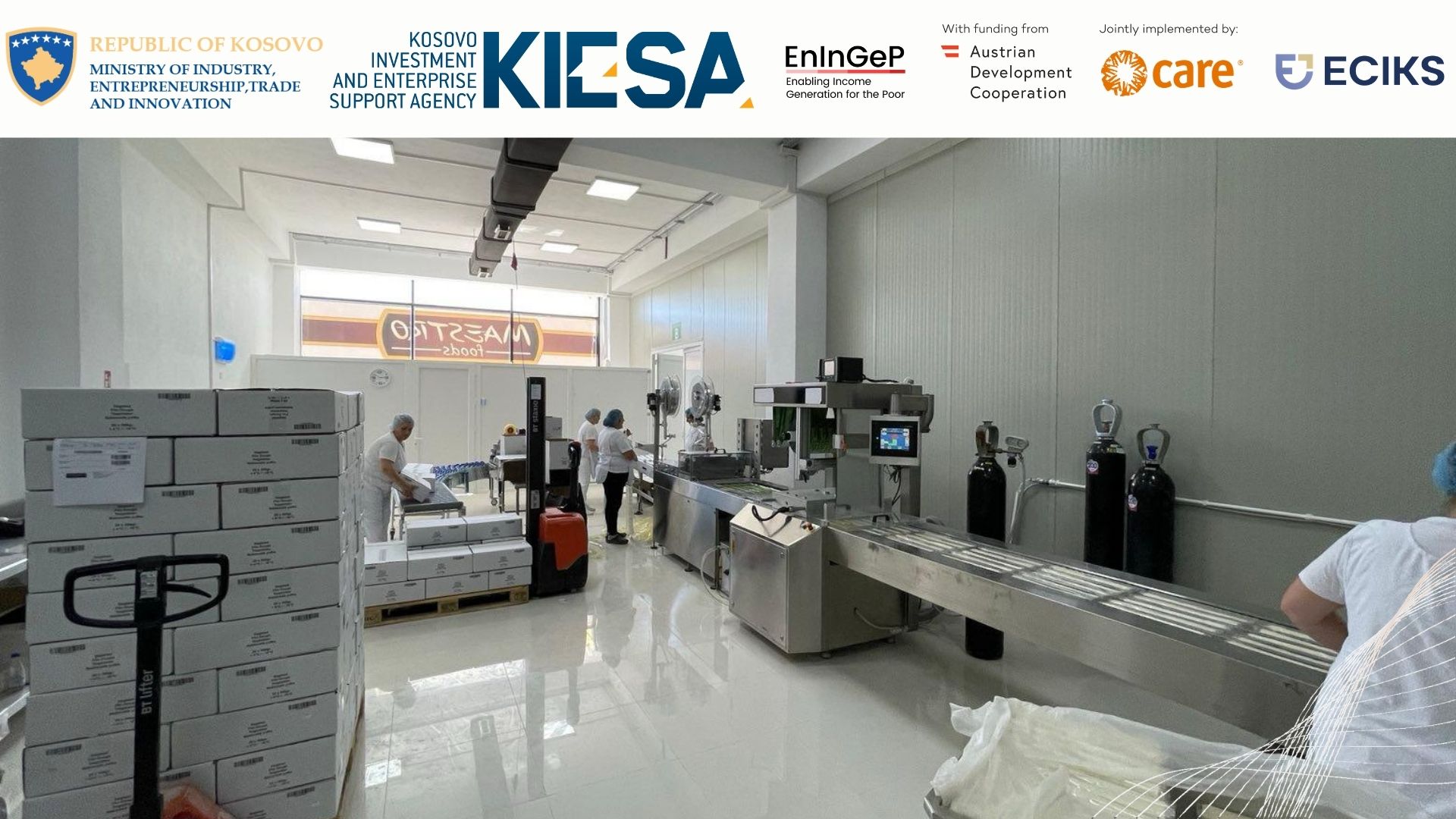
Founded in 2011 by the Behrami family, Maestro began modestly, with frozen pizzas produced in a small home-based workshop. But the ambition was always bigger. Within a few years, the company expanded into artisanal pastry sheets, a product that quickly gained traction in the local market. Continuous growth led to a major investment in 2020, when Maestro moved into a modern production facility and introduced advanced production lines imported from Sweden.
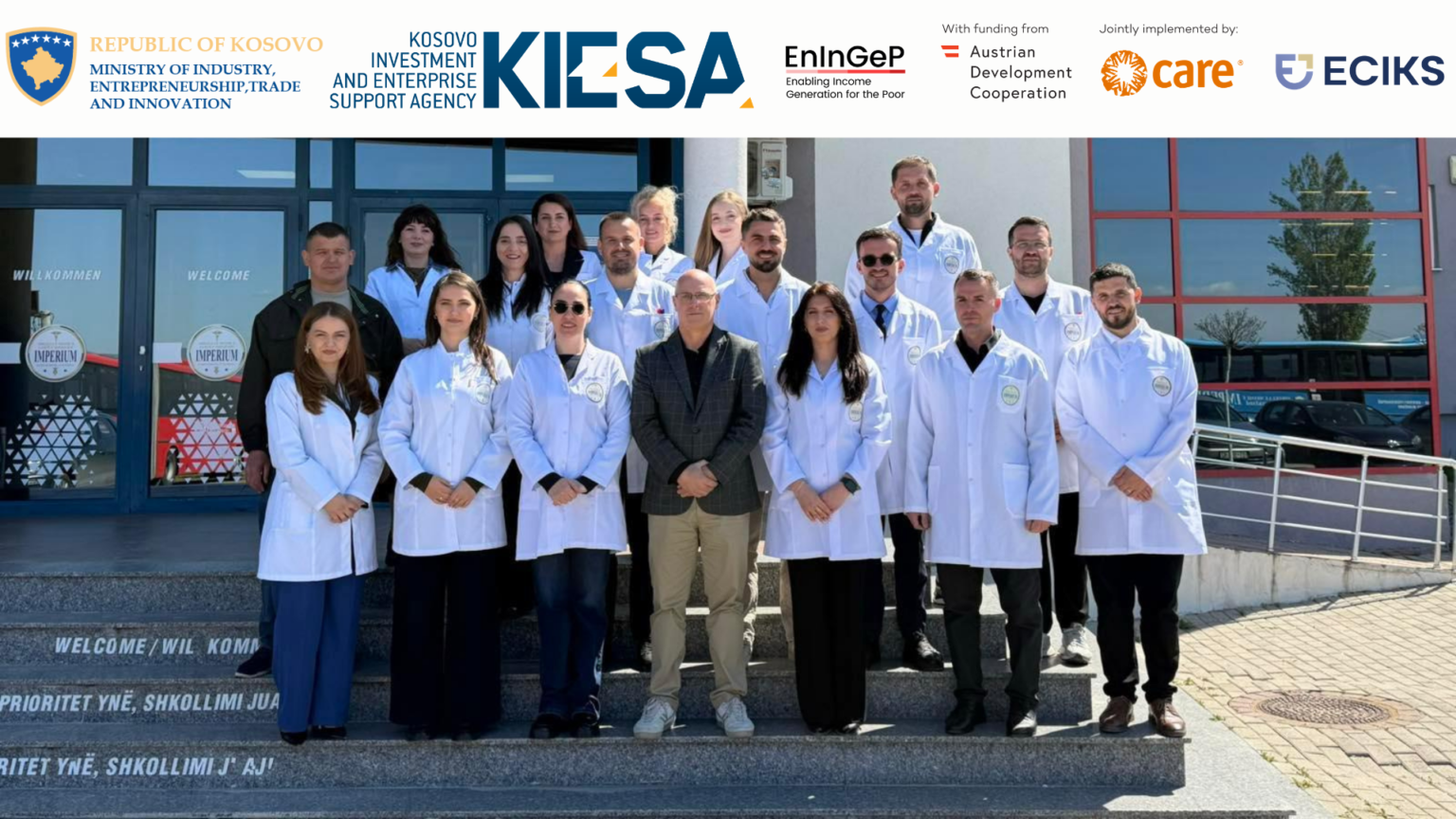
Alongside its founders, the company’s growth is supported by a dedicated team, where women play a central role in daily operations and production. Today, the company has a production capacity of up to 90,000 kg per month, with products reaching 16 international markets, including the EU and the United States, often under private labels. Behind this operation is a team of nearly 20 employees, most of them women engaged in production, highlighting the company’s contribution to expanding women’s participation in the manufacturing sector.
But growth brought complexity. Managing orders, tracking deliveries, and ensuring consistent quality standards became increasingly difficult with manual systems. Communication through informal channels like messaging apps created room for delays, errors, and inefficiencies, especially as volumes increased.
This is where targeted digital support made a real difference. Through the Digital Empowerment Initiative (DEI), Maestro introduced two practical digital solutions that directly improved key operational challenges. A dedicated system for order registration and delivery tracking replaced fragmented communication, allowing the company to manage sales and logistics with greater accuracy and control. At the same time, a digital monitoring system for temperature and hygiene ensured that food safety standards are consistently met, with automated alerts and reporting improving both compliance and accountability.
The impact is not abstract, it’s operational. Orders are now registered and tracked in real time, reducing errors and improving coordination between teams. Temperature and hygiene data are monitored systematically, strengthening quality assurance and aligning with international food safety requirements. What used to depend on manual checks and scattered communication is now structured, traceable, and reliable.
Beyond improving efficiency, these changes strengthen how Maestro is seen by its partners. In export markets, it’s not just about product quality, but also reliability and consistency. By digitalizing its processes, the company is building both trust and long-term credibility.
Looking ahead, the brothers are already planning their next step, expanding production and investing in a new facility. Their approach remains the same, focused, disciplined, and committed to doing things right.
Maestro’s story shows that growth is not just about ambition, but about having the right systems in place to support it, highlighting how business growth and digital transformation can go hand in hand with creating more inclusive employment opportunities.
The Digital Empowerment Initiative (DEI) is co-financed by the Ministry of Industry, Entrepreneurship, Trade and Innovation (MIETI) through KIESA, in collaboration with the EnInGeP project. EnInGeP is financed by the Austrian Development Cooperation (ADC) and is jointly implemented by CARE International and ECIKS.